
Safe Signs of a Clogged AC Condensate Drain and When to Call an HVAC Technician
Understanding the Air Conditioning Condensate Drain
In Florida’s warm and humid climate, your air conditioning system not only cools the air but also removes moisture through a condensate drain. This drain carries away the water produced as your AC cools your home. When it becomes clogged, water can back up, potentially causing damage or system inefficiency. Knowing the safe signs of a clogged condensate drain and when to get expert help can keep your home comfortable and protected.
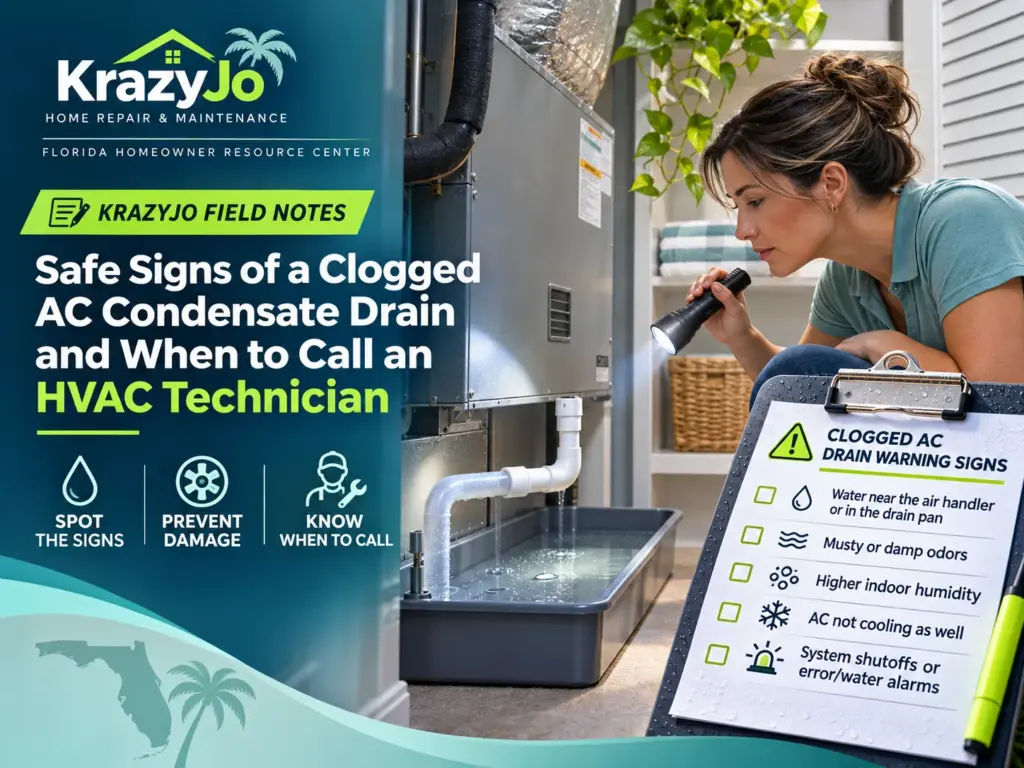
Common Signs Your AC Condensate Drain May Be Clogged
Watch for these telltale signs indicating a possible clog that you can safely observe without specialized tools:
- Water Pooling Near the Indoor Unit: A noticeable puddle of water near or under your air handler or furnace could mean the drain line is blocked.
- Increased Humidity Indoors: If your home’s air feels more humid than usual despite the AC running, it might be failing to properly remove moisture.
- Unpleasant Musty Smells: Standing water in a clogged drain can cause mold or mildew odors that you may detect near vents or the indoor unit.
- Frequent AC Shutoffs: Many systems have a safety switch that turns the AC off if water backs up to prevent damage; unexpected shutdowns can indicate a problem.
Safe Homeowner Actions to Address a Suspected Clog
If you notice any of these signs, there are a few cautious steps you can take:
- Turn Off the AC: To prevent overflow damage, switch off your air conditioning at the thermostat and circuit breaker before inspecting.
- Check the Drain Pan: Look for standing water in the plastic pan beneath your indoor unit; if it’s full, it confirms a blockage downstream.
- Clear Visible Debris: Sometimes leaves, dust, or debris near the drain opening can be gently removed without tools.
- Use a Wet-Dry Vacuum on the Drain Line: If you have experience, you can carefully try to suction the clog out from the drain line’s outdoor termination point, but do not use excessive force.
Always avoid introducing chemicals into the drain line yourself, as these can damage the system or pose health hazards without proper handling.
Common Mistakes Homeowners Should Avoid
- Ignoring Early Signs: Waiting until flooding or major water damage occurs can lead to costly repairs.
- Attempting Electrical or Mechanical Repairs: Don’t try to repair or replace components inside the air handler or tamper with the electrical system without proper training.
- Using Harsh Household Chemicals: Pouring bleach or drain cleaners into the condensate line can harm your AC’s materials and plumbing.
- Climbing on Roofs or Unsafe Areas: The condensate drain line may run to an exterior wall or rooftop; avoid unsafe access or falls.
When to Call a Qualified HVAC Technician
If you’ve taken safe, basic steps but still notice signs of clogging, it’s time to contact a professional. Situations that warrant expert attention include:
- Persistent water pooling despite your attempts to clear it
- Repeated AC system shutdowns linked to water issues
- Visible mold growth or strong musty odors near your system
- Uncertainty about the cause of the problem or how to safely intervene
HVAC professionals have specialized tools and knowledge to clear drain lines properly, inspect for hidden issues, and ensure your system runs safely and efficiently.
Practical Prevention Checklist for Your AC Condensate Drain
Regular maintenance can help prevent clogs and the problems they cause. Consider these steps as part of your home care routine:
- Keep the area around your indoor air handler clean and free of dust and debris.
- Ensure drain lines are visible where they exit your home and clear of clutter, vegetation, or debris.
- Replace or clean air filters regularly to reduce dust reaching the condensate drain.
- Schedule annual professional HVAC maintenance to inspect and clean your system thoroughly.
- Check your drain pan periodically for standing water or damage.
- Confirm that the safety float switch (if your system has one) is functional.
While these precautions can reduce risk, some drain issues develop quietly or require expert diagnosis. When in doubt, rely on the experience of an HVAC technician to protect your Florida home and maintain comfortable indoor air.
Want another set of hands?
Send your project details directly to KrazyJo and request a service review.
Request a quote