
Why Florida Driveways Get Slippery—and How to Keep Them Cleaner
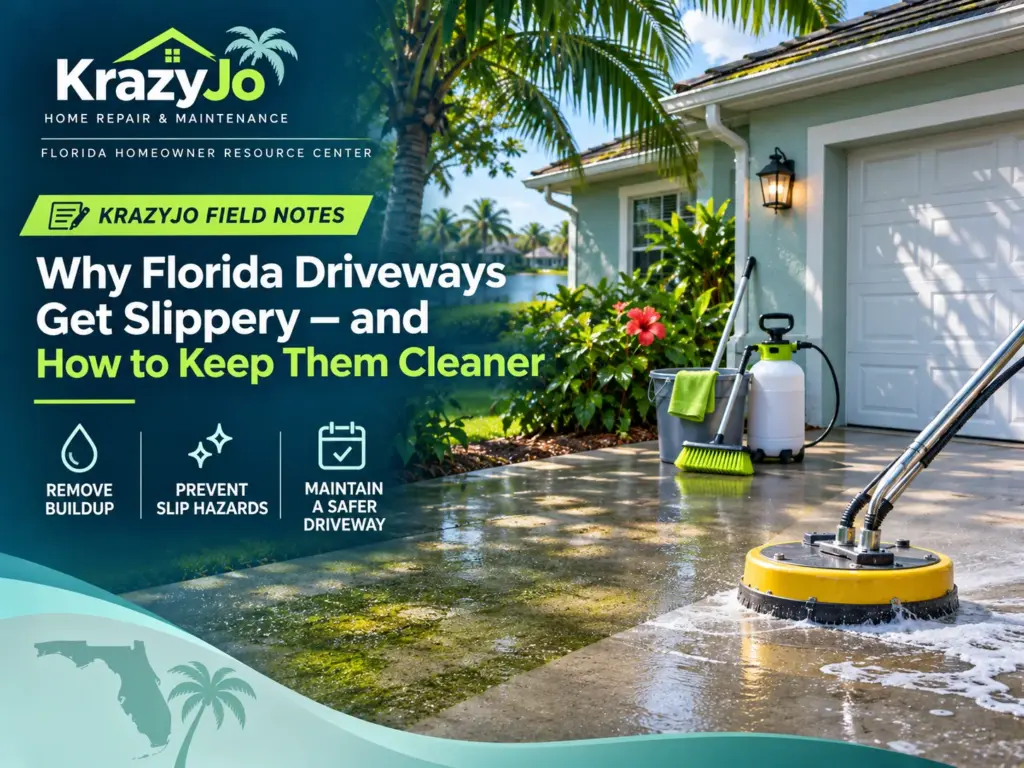
A clean driveway is more than a curb-appeal detail. In coastal and central Florida, wet weather and shade can help algae and other organic growth build up on concrete, pavers, and walkways. That film can become slippery, especially after an afternoon shower. Maintaining these areas regularly helps you catch problems before a routine cleaning turns into a major project.
Why buildup keeps coming back
Surfaces that stay damp, receive little direct sunlight, or collect leaves tend to show staining first. Low areas where water pools can stay wet long after the rest of the driveway has dried. Irrigation overspray may add moisture almost every day, even during stretches without rain.
Different stains call for different approaches. Green or black organic growth is not the same as rust, tire marks, or vehicle oil. Using the wrong cleaner can discolor pavers or damage landscaping. When you are not sure what caused a stain, identify it before choosing a treatment.
A safer routine for homeowners
- Walk the property after rain. Look for standing water, slick areas, and places where soil or mulch washes across the pavement.
- Remove leaves and loose debris. Sweeping limits the material that traps moisture and helps you see the surface clearly.
- Check irrigation coverage. Adjust sprinkler heads so sidewalks and driveways do not receive unnecessary overspray.
- Examine joints and edges. Watch for lifted pavers, crumbling concrete, or uneven sections that create a trip hazard.
- Set a maintenance schedule. In shaded or frequently wet areas, plan inspections more often than in sunny, well-drained sections.
Be cautious with washing equipment
High-pressure spray can etch concrete, dislodge joint sand, force water into vulnerable joints, and injure skin. Use cleaning methods suited to the surface and follow equipment and product directions. Never combine cleaning chemicals. Protect plants and keep people and pets away from the work area until it is safe.
If a surface is badly stained, has unstable pavers, or requires equipment you are not comfortable operating, arrange professional service rather than experimenting with increasingly aggressive products.
Prevention checklist
- Keep pavement clear of leaves and mulch.
- Reduce unnecessary sprinkler overspray.
- Watch for pooling water and drainage changes.
- Inspect for cracking, loose pavers, and slick areas.
- Choose a maintenance frequency based on shade and seasonal rain.
Small checks can make the next cleaning simpler and keep outdoor walking surfaces more inviting throughout the year.
Want another set of hands?
Send your project details directly to KrazyJo and request a service review.
Request a quote